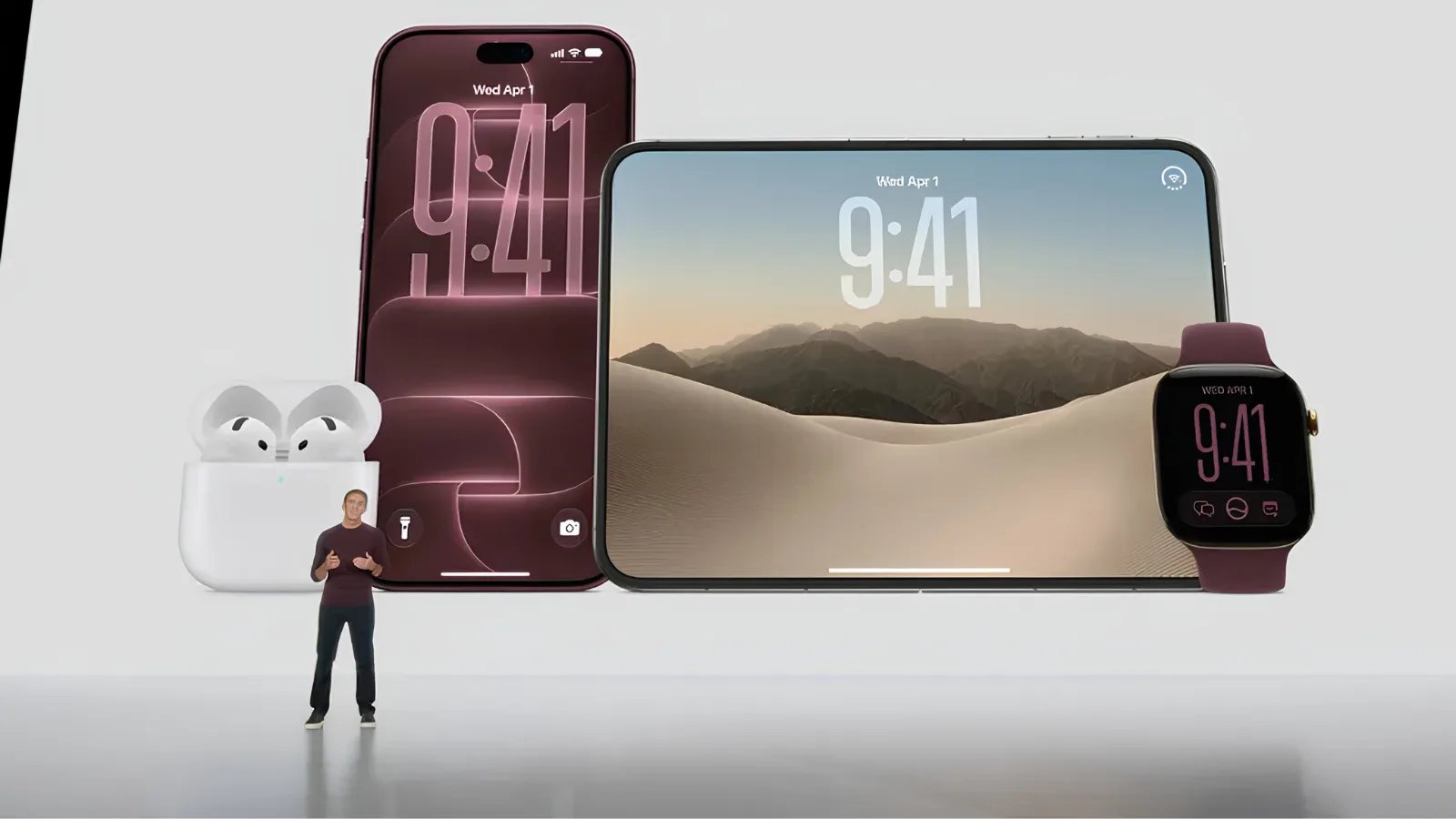
I remember the day the first iPhone launched. Everyone talked about the screen, the browser, the music. Now, with the iPhone Duo, Apple is doing it again, but this time, the big story isn't just a screen that folds. It's a platform that demands we rethink how our apps behave, how they use AI, and how they even look. The Duo is not just a bigger canvas; it's a statement that the future of iPhone apps is adaptive, context-aware, and deeply integrated with intelligence. If you are building an AI product, this is a wake-up call.
The Duo Demands a New Way to Build Apps
The iPhone Duo, Apple's first foldable, hit me by surprise. A book-style design with a 5.4-inch outer display and a massive 7.6-inch inner screen. Apple is not just giving us more pixels; they are forcing a new interaction model. You can't just scale your iPad app or stretch your iPhone UI. This is about state continuity and context.
When a user opens the Duo, your app needs to gracefully transition from a compact, one-handed experience to a sprawling two-pane productivity machine. Lock Screen controls move, the Home Screen Dock shifts, and even the Dynamic Island adapts to the side. If your app assumes controls always live at the top or bottom, you are already behind.
- Closed: Quick Actions
The outer display is for fast, one-handed tasks. Think instant replies, quick checks, or camera previews for others. Navigation needs to be super compact.
- Partially Open: Hands-Free & Collaborative
This mid-state is for tabletop viewing, collaborative camera work, or StandBy-like experiences. Your app needs to consider how to present information or controls when the device is propped up.
- Fully Open: Two-Pane Productivity
This is where the magic happens for serious work. Two apps side-by-side, or two windows of the same app. This is the first iPhone with native Split View multitasking. A sales pro could have a prospect profile open on the left and an AI-generated outreach draft on the right. This is a game-changer for focused workflows.
The core principle here is state continuity. If someone is drafting an email and folds the phone, that draft better be exactly where they left it when they reopen it. No restarts, no lost context. This is harder than it sounds, especially with camera, Pencil, or audio active.
// Example of a Duo-optimized sales workflow
Open Duo:
- Left pane: Prospect profile, CRM history, company details
- Right pane: AI-generated research, call notes, outreach draft, next action

During call:
- Left pane: Caller status, live transcript, sentiment analysis
- Right pane: Objection handling suggestions, next-best action prompts

After call:
- Left pane: Full transcript and summary
- Right pane: Editable follow-up email, one-tap CRM update
AI is Now a Core Platform Primitive, But It's Not Magic
The A20 Pro chip is a beast. Double the AI processing power of the A19 Pro, a dual 16-core Neural Engine, and 50% more memory bandwidth. These numbers are big, but the real story is what you do with them.
This isn't about moving your entire cloud AI backend to the iPhone. It's about a smarter, hybrid architecture. Your AI startup should be thinking:
- On-device: Personal, latency-sensitive tasks like wake-word detection, basic transcription, image pre-processing, and local summarization. This preserves privacy and works offline.
- Siri AI: For intent-driven actions. "Summarise this customer account." "Create a follow-up task from this email." This is where your app's core functions become discoverable through natural language.
- Cloud: Large-context reasoning, cross-user analytics, high-quality image generation, and managing your core business logic.
The new Siri AI, rolling out in beta with iOS 27, is a prime example. It understands personal context, what's on screen, and can even understand camera input. This creates massive opportunities for action-oriented apps. For our outbound sales product at ReachWise, we are already thinking about exposing actions like "Find a prospect," "Draft a personalised outreach," or "Schedule a call."
Also, Apple has hinted at daily usage limits for some server-side Apple Intelligence features, with paid tiers later. If your product relies on heavy, repeated AI generation, this is a cost you need to factor in.
The Camera Becomes a Programmable, Verifiable Eye
The iPhone 18 Pro introduces a variable aperture for its main 48MP camera. This isn't just a computational trick; it's a physical, six-blade mechanism. And Apple is making an API available to developers.
This immediately opens doors for professional camera and filmmaking apps. You can build depth-of-field effects that combine optical aperture with computational photography. Imagine an AI video workflow that automatically selects aperture based on scene analysis, or a real estate app that uses specific aperture presets for consistent property shots.
if cameraDevice.supportsVariableAperture {
    // Present aperture controls and presets to the user.
    // Allow AI to suggest optimal aperture based on scene.
} else {
    // Fall back to computational depth-of-field controls or manual focus.
}
Then there's Apple Reference Image, an opt-in mode that signs sensor data for every pixel. This creates an unalterable reference image for comparison. For news, photojournalism, or insurance claims, this is huge. It helps establish provenance, showing if an image truly came from a device and hasn't been tampered with. It won't prove the broader context of a photo, but it's a powerful tool for establishing a baseline truth.
Combined with upcoming SynthID support for identifying AI-generated content, Apple is taking image authenticity seriously. This is not just a consumer feature; it is infrastructure for trust in a world awash with synthetic media.
The Boring Stuff Still Bites: Policy, Deprecations, and Regions
Beyond the flashy new hardware and AI, several less glamorous but equally critical changes demand attention.
macOS 27 Ends Ordinary Rosetta Support
If you have any macOS products, this is an urgent deadline. Intel-only apps will stop running on Apple Silicon Macs after macOS 27. You need to build universal binaries, audit third-party libraries, and test everything. If you are shipping developer tools or enterprise utilities, this is not optional.
Sign in With Apple Email Domains Are Changing
The private relay addresses are moving from privaterelay.appleid.com to private.icloud.com. Your email validation logic, database constraints, and allowlists need updating. This is a concrete engineering task, not a "nice to have."
EU Business Terms Change October 1, 2026
Apple is replacing the Core Technology Fee with a 5% Core Technology Commission on digital transactions for apps distributed outside the App Store in the EU. This removes the Initial Acquisition Fee and Store Services Fee. For a UK startup like ours targeting EU users, this is a massive commercial recalculation. You need to re-evaluate your unit economics, payment processing costs, and even your distribution strategy in Europe.
ImageCreator Is Being Discontinued
If you experimented with native Apple image-generation features, the ImageCreator class will no longer work in iOS 27. Migrate to the Image Playground framework and current Apple Intelligence APIs. This is a specific API deprecation that will break your code if ignored.
The Real Significance
The iPhone Duo and iOS 27 mark a significant pivot for Apple. It's no longer just about faster chips or slightly better cameras. We are moving into an era where:
- Apps must be truly adaptive, handling multiple displays and folding states with grace.
- AI is a deeply integrated platform capability, allowing for powerful, context-aware actions, but demanding a hybrid local/cloud architecture.
- The camera is a programmable, verifiable sensor, opening new professional workflows and trust mechanisms.
- Regional policy differences and platform deprecations are not footnotes; they are critical engineering and business considerations.
For an AI startup, the strongest opportunity isn't to build another generic chatbot. It is to craft focused workflows that combine the Duo's adaptive form factor, the A20 Pro's on-device intelligence, Siri AI's action-oriented capabilities, and your cloud backend for complex reasoning and collaboration. The future is about building intelligent tools that fit the user's context, not just their screen size.
I do this kind of work for other teams too. If you need a senior AI engineer on your product, or someone to fix code an AI wrote, here’s how to hire me.
Essays on shipping software and building products. No schedule, no filler.