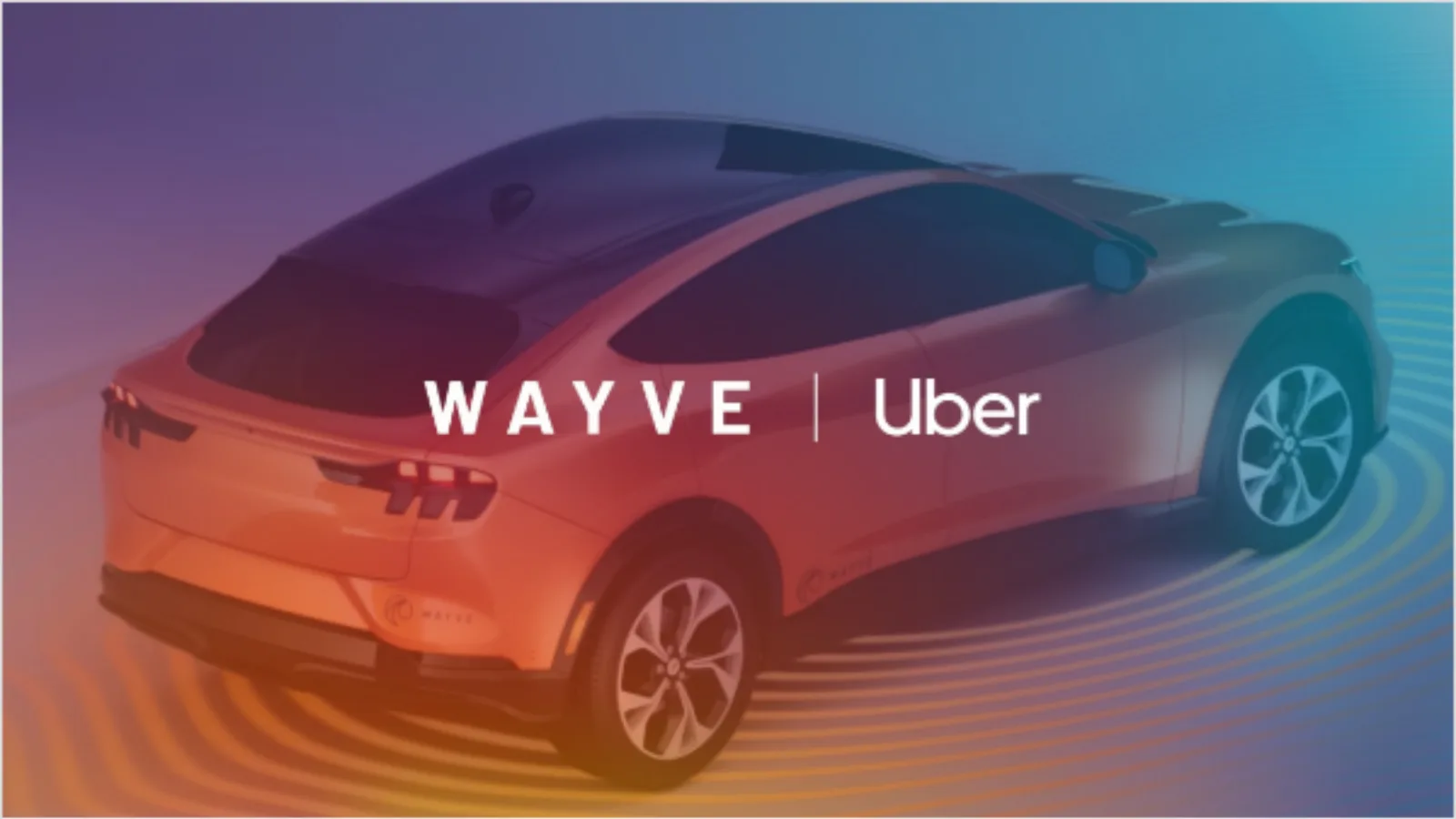
The news hit my inbox on September 3rd, 2026: Wayve and Uber had launched London's first autonomous ride-hailing service. For anyone following AI in mobility, this felt like a huge moment, a UK first. But as I read the details, one specific line stood out: "a TfL-licensed safety driver onboard". And that, for me, changes everything about how we should think about this launch.
This isn't the fully driverless future many imagined, not yet. The fleet of 15-20 Ford Mustang Mach-Es is a drop in the ocean compared to London's nearly 100,000 private hire vehicles. You're far more likely to get a human driver than an AI one. Despite that, over 140,000 Londoners have already opted in via the Uber app, ready to try it out. That's a massive vote of confidence, or at least curiosity.
The driver in the room: Why 'supervised' matters
The key to understanding this launch is the word "supervised". A trained, TfL-licensed private hire driver sits in the front seat, ready to take over. I've heard the reports from journalists who took rides: mostly smooth, but with moments. One BBC reporter saw the safety driver briefly intervene when a van's rear doors swung open, causing a sharp brake and a quick takeover. Wayve said the AI could have handled it. Maybe. But the driver was there, and they acted. This isn't a failure, it's a feature of this stage.
This is about building trust, gathering data, and iterating in the most complex driving environment most AI systems will ever face. London's narrow, winding streets, its aggressive cyclists, unpredictable pedestrians, and constant roadworks are a nightmare for even the best human drivers. It's an order of magnitude harder than the grid systems of Phoenix or San Francisco, where Waymo operates.
Wayve's Bet: AI-Native vs. HD Maps
What makes Wayve interesting is their approach. They call it AV2.0, an "agentic" AI system. Unlike some competitors, Wayve doesn't rely on high-definition (HD) maps or a massive LiDAR sensor suite. Instead, their AI Driver learns from real-world driving data and experience, adapting to new roads, weather, and traffic patterns. They use surround sensors and cameras, making decisions in real-time based on what the AI sees.
This is a fundamental disagreement with companies like Waymo, which lean heavily on meticulously pre-mapped routes and a huge sensor array. Wayve's bet is that an AI-native approach will scale faster and be more adaptable across different cities and vehicle types. If they pull it off, it's a significant win for the idea that AI can learn to drive like a human, rather than needing every inch of road precisely charted beforehand.
Wayve has already raised around $2.6 billion, including a $1.2 billion Series D round in February 2026 at an $8.6 billion valuation. Investors like SoftBank, Microsoft, NVIDIA, and Uber aren't just throwing money around for fun. They see the potential for this AI-first approach.
The Uber Partnership and Global Ambition
Uber first invested in Wayve back in August 2024, with a plan to deploy Wayve-powered vehicles across 12 global markets. London is the first. Next up is Tokyo, expected in late 2026, using Nissan LEAFs equipped with NVIDIA DRIVE Hyperion hardware. This multi-OEM, multi-market strategy is smart. Wayve isn't trying to build its own fleet and compete directly with Uber; they want to be the AI driver stack that powers everyone else.
For Uber, this is about differentiation. They get an early lead in the UK and Europe. Over time, autonomous rides should become cheaper and safer. But right now, Uber admits AVs aren't cheaper to operate than human drivers. This partnership lets human and AI drivers coexist, a pragmatic approach for a rapidly evolving market.
What London teaches us about scaling AI
The UK government is understandably keen to celebrate this as a "major milestone for the future of transport in London, as British innovation brings this technology onto our roads." And it is. But the regulatory landscape is a minefield. The Department for Transport is still working towards a framework for self-driving cars "from 2027", with no firm date for fully driverless permits.
This means Wayve and Uber are taking a cautious, iterative path. They're gathering data, refining their AI, and building public trust under the watchful eye of regulators and safety drivers. This slow, deliberate process is exactly what we need for AI systems deployed in safety-critical applications. It's not about being first to market with something half-baked. It's about being first to market with something reliable.
What to Watch Next
There are a few things I'll be keeping an eye on:
- The supervised-to-driverless transition: When will Wayve and regulators agree to remove the safety driver, and under what conditions? Will it be geo-fenced areas, specific times, or only in clear weather?
- The 12-market rollout: Which cities follow London and Tokyo, and how quickly can Wayve adapt its AI to different road conditions and driving cultures?
- Regulatory clarity: When will the DVSA and TfL finalize the APS permit process? That's the real bottleneck for fully driverless operations.
The public demand is clearly there, with 140,000+ people already signed up. The technology is advancing rapidly. But the biggest challenge now isn't just the AI itself, it's the dance between innovation, regulation, and public acceptance. Wayve and Uber's London launch shows us exactly how messy, and important, that dance is.
Key Facts Summary
| Aspect | Detail |
|---|---|
| Launch date | 3 September 2026 |
| Location | London, UK (all boroughs, excluding airports) |
| Service type | Supervised autonomous rides (safety driver onboard) |
| Vehicles | Ford Mustang Mach-E (all-electric) with Wayve AI Driver |
| Fleet size | 15 to 20 vehicles at launch |
| Booking | Via Uber app (UberX, Comfort, Electric); autonomous option offered after booking if available |
| Fares | Same as standard UberX/Comfort/Electric; upfront pricing |
| Opt-ins | 140,000+ Londoners |
| Regulatory status | TfL private hire licences granted; fully driverless APS permits not yet issued (expected 2027+) |
| Next vehicle/platform | Nissan LEAF + NVIDIA DRIVE Hyperion in Tokyo (late 2026) |
| Global partnership | Uber to Wayve deal covers 12 markets |
| Wayve funding | ~$2.6bn total; $1.2bn Series D at $8.6bn valuation (Feb 2026) |
| Key investors | SoftBank, Microsoft, NVIDIA, Uber, Mercedes-Benz, Nissan, Stellantis |
The future of AI isn't about a single flick of a switch to 'driverless'. It's about carefully managing risk, building trust, and iterating in the real world. London, with its chaotic streets and cautious regulators, is the perfect proving ground for that messy, incremental, and ultimately more robust approach to deploying AI at scale.
I do this kind of work for other teams too. If you need a senior AI engineer on your product, or someone to fix code an AI wrote, here’s how to hire me.
Essays on shipping software and building products. No schedule, no filler.